Foundations
Deeper
Frontier
Transcript and shot list
Draft material
From wordpress-export/pages/emergence-of-life.md
Emergence of life
the emergence of Life
how did life originate and evolve?
In this section, you will learn how life originated and evolved throughout the earth’s history. This was the time when simple organisms slowly evolved into complex organisms like humans. You learn how the earth’s surface and climate evolved over time which made it a hospitable place to live. You will learn about:
- The Earth Early Environment
- Origin of Life and The Last Universal Common Ancestor
- The Great Oxidation Event
- Plate Tectonics: Shaping the Earth’s Future.
- The Complex Organisms
- Multicellular Organisms
- The Explosion of Life
- Extinction of Dinosaurs
- The Emergence of Primates
4.2-3.9 billion years ago
Late Heavy Bombardment
A resonance between Jupiter and Saturn pushes Neptune to leave Uranus’ orbit, and they both migrate into the outer solar system, producing a catastrophic disruption in the Kuiper Belt and sparking the late-heavy bombardment. A disproportionately high number of asteroids crashed with the inner Solar System’s early terrestrial planets. Have you ever notice the craters on moon most of them were formed during this period.
Early Environment
There was a lot of volcanic activity, and volcanoes spew out gases, which create the atmosphere. As a result, the early atmosphere was most likely constituted of carbon dioxide, nitrogen, ammonia, methane, and water vapour. There was no free oxygen in the early Earth’s atmosphere, which may have been crucial because oxygen is extremely disruptive. Complex organic compounds can accumulate and remain stable in the absence of oxygen. As a result, we may wind up with high concentrations of them in the early ocean.
3.9 billion years ago
RNA World
The first oceans were a dense soup of billions of various chemical substances. These basic blocks came together over 100 million years to form the complex chemicals we see in living things today. As a result, amino acids came together to form proteins. The most important result was the formation of nucleic acids. This is called as RNA.
Early proteins in the prebiotic soup were discovered to be able to form associations with other complex molecules, and when heated and cooled, they spontaneously form microspheres. These are little spherical structures with cell-like characteristics. They have the ability to gather material from the primordial seas. They grow when they do this. They have the ability to divide when they become too large. These are similar to cells.
Over the course of 100 million years between 3.9 and 3.8 billion years ago, the replication and information storing functions of RNA were eventually replaced by the molecule that all living things now call DNA.
3.8 billion years ago
The Last Common Ancestor
The single cell is referred to as the last universal common ancestor. The original type of cell most likely obtained energy and resources by capturing organic compounds found in the early ocean. Errors in the replication of that DNA result in variety. As a result of the replication, the cells’ roles are altered. Natural selection feeds off of this diversity. Natural selection can favour cells that grow quicker or employ more diversified substances, and this is what evolution is all about.
Characteristics of organisms were governed by what he referred to as genes. Genes are made of DNA, and DNA is similar to a set of instructions for making an organism. Variations in DNA sequence produce differences in how we look and behave. When DNA replicates, these changes are caused by mutation and changes in DNA can cause disparities in colour, form, or height.
Archaebacteria were the first primitive prokaryotic cells to emerge in the ocean around 3.8 billion years ago, living primarily in the harsh conditions of primitive oceans.
Earliest Fossil Evidence of Life
Bacteria produce a protective organic substance known as exopolysaccharides while growing in stressful atmospheric conditions, which binds all the bacteria together to form a large slimy mat known as “biofilms.” The capability of forming colonies gave them an opportunity to come close to one another and form protective rock-like structures capable of photosynthesis during the Archean aeon period. These specialized structures are known as “Stromatolites.” These colonies allow them to share food and growth materials during times of difficulty or in a harsh environment.
Plate tectonics
The lithosphere, a planet’s solid outermost shell (the crust and upper mantle), is divided into numerous huge continental and ocean-sized plates, as well as several smaller ones. These plates move relative to one another at rates ranging from 5 to 10 cm per year, interacting along their boundaries as they converge, diverge, or slip past one another. The majority of Earth’s seismic and volcanic activity is assumed to be caused by such interactions. Mountains rise where plates press together, or converge, whereas continents fracture and seas form where plates pull apart, or diverge. The continents are anchored in the plates and drift passively with them, resulting in dramatic changes in Earth’s geography over millions of years. The movement of significant sections of Earth’s crust have contributed to the planet becoming more hospitable to life.
2.5 billion years ago
Photosynthesis and The Great Oxidation Event
Once evolution begins, larger and more complicated cells, such as those that harvest the sun’s energy. Photosynthesis produces oxygen, which progressively alters the atmosphere to the one we know today. The first oxygenic (oxygen-producing) cells were most likely blue-green algae (cyanobacteria), which arose between two and three billion years ago. Cyanophytes are prokaryotic cells, which means they lack separate membrane-enclosed subcellular components (organelles). These microscopic organisms are thought to have considerably boosted the oxygen level of the atmosphere, allowing aerobic (oxygen-using) life to flourish. This caused a quick and substantial increase in oxygen levels, making the environment less suitable for other microorganisms that couldn’t withstand oxygen.
1.8 billion years ago
First complex cells
Eukaryotes are the organisms that are characterized by their complex cells that contain a true nucleus and other membrane-bound organelles, and they are believed to have evolved from prokaryotes (bacteria and archaea) between 2.5 and 1.5 billion years ago. The engulfed aerobic bacterial cell might have facilitated the host’s use of oxygen to break down food and generate energy, and in turn, the Archea might have protected the bacterial cells from the predators. The increased concentration of oxygen in the atmosphere might have been a survival challenge for many Archaebacteria of that time, which later triggered the evolution of aerobic respiration, which is a more efficient form of metabolism that requires oxygen.
1.5 billion years ago
Sexual Reproduction
Single-celled protists were the first eukaryotes to reproduce sexually. Asexual reproduction produces offspring who are genetically identical to their parents. Any genetic mutation passed down from previous generations could be deadly to the next generation if not rectified or reduced. Sexual reproduction results in a new genotype with a good fault tolerance mechanism for numerous molecular processes such as DNA repair and complementation. It also raises an individual’s tolerance ability to any pathogenic attack that impacts them genetically.
1 billion years ago
Multicellular Organisms
The first multicellular organisms likely originated around 1 billion years ago during the Proterozoic Era. The exact process of how multicellularity evolved is believed to have arisen through a combination of genetic and environmental factors. Multicellularity may have been evolved through the formation of colonies of single-celled organisms that eventually evolved into specialized cells with different functions within the colony. It is also possible that multicellularity arose through the fusion of individual cells, which then began to work together as a single entity. Another possibility is that multicellularity evolved through the symbiotic relationships between different single-celled organisms, with each organism specializing in specific functions. Ultimately, it is likely that a combination of these mechanisms contributed to the evolution of multicellular organisms.
540 million years ago
Cambrian Explosion: Appearance of Major Animal Groups
This was the period of rapid diversification and proliferation of life on Earth that occurred around 541 million years ago during the Cambrian period. During this time, there was an unprecedented increase in the number and diversity of fossilized organisms, including the first appearance of most major animal phyla. This sudden burst of evolutionary activity is thought to have been triggered by a combination of environmental factors, such as changes in sea level, temperature, and ocean chemistry, as well as the emergence of new predatory and defensive adaptations. The Cambrian Explosion is considered one of the most significant events in the history of life on Earth, as it laid the foundation for the subsequent evolution of the animal kingdom.
500 million years ago
Life on Land
During the Late Silurian and Early Devonian periods, there was gradual colonization of land by aquatic organisms that adapted to living on land over time. The first land-dwelling organisms were likely simple, multicellular plants, such as mosses and liverworts. These plants were able to survive on land by developing specialized structures such as roots, stems, and leaves that allowed them to absorb water and nutrients from the soil.
Over millions of years, these simple land plants evolved into more complex forms, such as ferns and gymnosperms. This in turn allowed for the emergence of more complex land animals, including arthropods, amphibians, and eventually mammals.
250 million years ago
Dinosaurs and Reptile-Like Mammals
Dinosaurs originated during the Triassic Period, which began around 252 million years ago and lasted for about 50 million years. The first dinosaurs evolved from a group of reptiles called archosaurs, which had been present on Earth for millions of years prior. They first appeared in what is now South America but quickly spread to other parts of the world as the supercontinent Pangaea began to break apart.
Almost around same time, mammals also originated. The first mammals were small, nocturnal animals that lived alongside the dinosaurs. They evolved from a group of mammal-like reptiles known as therapsids, which had some characteristics of both reptiles and mammals.
65 million years ago
Asteroid Impact and Extinction of Dinosaurs
The leading theory for their extinction is an asteroid impact, which caused a global catastrophe. The asteroid, estimated to be about 10-15 kilometers in diameter, struck the Earth with an enormous amount of force, releasing energy equivalent to billions of atomic bombs. The impact created a massive dust cloud that blocked out sunlight and caused a “nuclear winter” effect, causing the extinction of many forms of life, including the dinosaurs.
The extinction of the dinosaurs around 65 million years ago cleared the way for mammals to become the dominant land animals, and they continue to thrive today in a wide variety of environments.
Early Primates
The evolution of early primates can be traced back to the late Cretaceous period, around 75-65 million years ago, with the emergence of a group of mammals known as plesiadapiforms. These mammals had a number of primate-like features, such as grasping hands and feet, sharp teeth, and a large brain relative to body size.
7 million years ago
The last common ancestor of humans and chimps.
The last common ancestor of chimpanzees and humans is believed to have existed around 6-7 million years ago. This ancestor is thought to have been a primate species that lived in Africa and was the common ancestor of both chimpanzees and humans. It is believed to have been a small, arboreal mammal with a similar body shape and brain size to modern chimpanzees. The exact identity of this ancestor is still unknown, but several extinct primate species, such as Sahelanthropus, Orrorin, and Ardipithecus, have been proposed as potential candidates.
wHAT’S bEFORE?
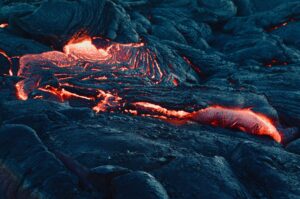
The Early Earth
wHAT’S NEXT?
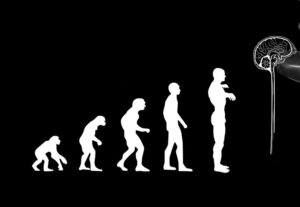
Collective Learning
From wordpress-export/posts/where-did-the-life-come-from.md
Where did the Life come from?
In this section, you will learn how life originated and evolved throughout the earth’s history. This was the time when simple organisms slowly evolved into complex organisms like humans. You learn how the earth’s surface and climate evolved over time which made it a hospitable place to live. You will learn about:
- The Earth Early Environment
- Origin of Life and The Last Universal Common Ancestor
- The Great Oxidation Event
- Plate Tectonics: Shaping the Earth’s Future.
- The Complex Organisms
- Multicellular Organisms
- The Explosion of Life
- Extinction of Dinosaurs
- The Emergence of Primates
4.2-3.9 billion years ago
Late Heavy Bombardment
A resonance between Jupiter and Saturn pushes Neptune to leave Uranus’ orbit, and they both migrate into the outer solar system, producing a catastrophic disruption in the Kuiper Belt and sparking the late-heavy bombardment. A disproportionately high number of asteroids crashed with the inner Solar System’s early terrestrial planets. Have you ever notice the craters on moon most of them were formed during this period.
Early Environment
There was a lot of volcanic activity, and volcanoes spew out gases, which create the atmosphere. As a result, the early atmosphere was most likely constituted of carbon dioxide, nitrogen, ammonia, methane, and water vapour. There was no free oxygen in the early Earth’s atmosphere, which may have been crucial because oxygen is extremely disruptive. Complex organic compounds can accumulate and remain stable in the absence of oxygen. As a result, we may wind up with high concentrations of them in the early ocean.
3.9 billion years ago
RNA World
The first oceans were a dense soup of billions of various chemical substances. These basic blocks came together over 100 million years to form the complex chemicals we see in living things today. As a result, amino acids came together to form proteins. The most important result was the formation of nucleic acids. This is called as RNA.
Early proteins in the prebiotic soup were discovered to be able to form associations with other complex molecules, and when heated and cooled, they spontaneously form microspheres. These are little spherical structures with cell-like characteristics. They have the ability to gather material from the primordial seas. They grow when they do this. They have the ability to divide when they become too large. These are similar to cells.
Over the course of 100 million years between 3.9 and 3.8 billion years ago, the replication and information storing functions of RNA were eventually replaced by the molecule that all living things now call DNA.
3.8 billion years ago
The Last Common Ancestor
The single cell is referred to as the last universal common ancestor. The original type of cell most likely obtained energy and resources by capturing organic compounds found in the early ocean. Errors in the replication of that DNA result in variety. As a result of the replication, the cells’ roles are altered. Natural selection feeds off of this diversity. Natural selection can favour cells that grow quicker or employ more diversified substances, and this is what evolution is all about.
Characteristics of organisms were governed by what he referred to as genes. Genes are made of DNA, and DNA is similar to a set of instructions for making an organism. Variations in DNA sequence produce differences in how we look and behave. When DNA replicates, these changes are caused by mutation and changes in DNA can cause disparities in colour, form, or height.
Archaebacteria were the first primitive prokaryotic cells to emerge in the ocean around 3.8 billion years ago, living primarily in the harsh conditions of primitive oceans.
Earliest Fossil Evidence of Life
Bacteria produce a protective organic substance known as exopolysaccharides while growing in stressful atmospheric conditions, which binds all the bacteria together to form a large slimy mat known as “biofilms.” The capability of forming colonies gave them an opportunity to come close to one another and form protective rock-like structures capable of photosynthesis during the Archean aeon period. These specialized structures are known as “Stromatolites.” These colonies allow them to share food and growth materials during times of difficulty or in a harsh environment.
Plate tectonics
The lithosphere, a planet’s solid outermost shell (the crust and upper mantle), is divided into numerous huge continental and ocean-sized plates, as well as several smaller ones. These plates move relative to one another at rates ranging from 5 to 10 cm per year, interacting along their boundaries as they converge, diverge, or slip past one another. The majority of Earth’s seismic and volcanic activity is assumed to be caused by such interactions. Mountains rise where plates press together, or converge, whereas continents fracture and seas form where plates pull apart, or diverge. The continents are anchored in the plates and drift passively with them, resulting in dramatic changes in Earth’s geography over millions of years. The movement of significant sections of Earth’s crust have contributed to the planet becoming more hospitable to life.
2.5 billion years ago
Photosynthesis and The Great Oxidation Event
Once evolution begins, larger and more complicated cells, such as those that harvest the sun’s energy. Photosynthesis produces oxygen, which progressively alters the atmosphere to the one we know today. The first oxygenic (oxygen-producing) cells were most likely blue-green algae (cyanobacteria), which arose between two and three billion years ago. Cyanophytes are prokaryotic cells, which means they lack separate membrane-enclosed subcellular components (organelles). These microscopic organisms are thought to have considerably boosted the oxygen level of the atmosphere, allowing aerobic (oxygen-using) life to flourish. This caused a quick and substantial increase in oxygen levels, making the environment less suitable for other microorganisms that couldn’t withstand oxygen.
1.8 billion years ago
First complex cells
Eukaryotes are the organisms that are characterized by their complex cells that contain a true nucleus and other membrane-bound organelles, and they are believed to have evolved from prokaryotes (bacteria and archaea) between 2.5 and 1.5 billion years ago. The engulfed aerobic bacterial cell might have facilitated the host’s use of oxygen to break down food and generate energy, and in turn, the Archea might have protected the bacterial cells from the predators. The increased concentration of oxygen in the atmosphere might have been a survival challenge for many Archaebacteria of that time, which later triggered the evolution of aerobic respiration, which is a more efficient form of metabolism that requires oxygen.
1.5 billion years ago
Sexual Reproduction
Single-celled protists were the first eukaryotes to reproduce sexually. Asexual reproduction produces offspring who are genetically identical to their parents. Any genetic mutation passed down from previous generations could be deadly to the next generation if not rectified or reduced. Sexual reproduction results in a new genotype with a good fault tolerance mechanism for numerous molecular processes such as DNA repair and complementation. It also raises an individual’s tolerance ability to any pathogenic attack that impacts them genetically.
1 billion years ago
Multicellular Organisms
The first multicellular organisms likely originated around 1 billion years ago during the Proterozoic Era. The exact process of how multicellularity evolved is believed to have arisen through a combination of genetic and environmental factors. Multicellularity may have been evolved through the formation of colonies of single-celled organisms that eventually evolved into specialized cells with different functions within the colony. It is also possible that multicellularity arose through the fusion of individual cells, which then began to work together as a single entity. Another possibility is that multicellularity evolved through the symbiotic relationships between different single-celled organisms, with each organism specializing in specific functions. Ultimately, it is likely that a combination of these mechanisms contributed to the evolution of multicellular organisms.
540 million years ago
Cambrian Explosion: Appearance of Major Animal Groups
This was the period of rapid diversification and proliferation of life on Earth that occurred around 541 million years ago during the Cambrian period. During this time, there was an unprecedented increase in the number and diversity of fossilized organisms, including the first appearance of most major animal phyla. This sudden burst of evolutionary activity is thought to have been triggered by a combination of environmental factors, such as changes in sea level, temperature, and ocean chemistry, as well as the emergence of new predatory and defensive adaptations. The Cambrian Explosion is considered one of the most significant events in the history of life on Earth, as it laid the foundation for the subsequent evolution of the animal kingdom.
500 million years ago
Life on Land
During the Late Silurian and Early Devonian periods, there was gradual colonization of land by aquatic organisms that adapted to living on land over time. The first land-dwelling organisms were likely simple, multicellular plants, such as mosses and liverworts. These plants were able to survive on land by developing specialized structures such as roots, stems, and leaves that allowed them to absorb water and nutrients from the soil.
Over millions of years, these simple land plants evolved into more complex forms, such as ferns and gymnosperms. This in turn allowed for the emergence of more complex land animals, including arthropods, amphibians, and eventually mammals.
250 million years ago
Dinosaurs and Reptile-Like Mammals
Dinosaurs originated during the Triassic Period, which began around 252 million years ago and lasted for about 50 million years. The first dinosaurs evolved from a group of reptiles called archosaurs, which had been present on Earth for millions of years prior. They first appeared in what is now South America but quickly spread to other parts of the world as the supercontinent Pangaea began to break apart.
Almost around same time, mammals also originated. The first mammals were small, nocturnal animals that lived alongside the dinosaurs. They evolved from a group of mammal-like reptiles known as therapsids, which had some characteristics of both reptiles and mammals.
65 million years ago
Asteroid Impact and Extinction of Dinosaurs
The leading theory for their extinction is an asteroid impact, which caused a global catastrophe. The asteroid, estimated to be about 10-15 kilometers in diameter, struck the Earth with an enormous amount of force, releasing energy equivalent to billions of atomic bombs. The impact created a massive dust cloud that blocked out sunlight and caused a “nuclear winter” effect, causing the extinction of many forms of life, including the dinosaurs.
The extinction of the dinosaurs around 65 million years ago cleared the way for mammals to become the dominant land animals, and they continue to thrive today in a wide variety of environments.
Early Primates
The evolution of early primates can be traced back to the late Cretaceous period, around 75-65 million years ago, with the emergence of a group of mammals known as plesiadapiforms. These mammals had a number of primate-like features, such as grasping hands and feet, sharp teeth, and a large brain relative to body size.
7 million years ago
The last common ancestor of humans and chimps.
The last common ancestor of chimpanzees and humans is believed to have existed around 6-7 million years ago. This ancestor is thought to have been a primate species that lived in Africa and was the common ancestor of both chimpanzees and humans. It is believed to have been a small, arboreal mammal with a similar body shape and brain size to modern chimpanzees. The exact identity of this ancestor is still unknown, but several extinct primate species, such as Sahelanthropus, Orrorin, and Ardipithecus, have been proposed as potential candidates.
In this section, you will learn how life originated and evolved throughout the earth’s history. This was the time when simple organisms slowly evolved into complex organisms like humans. You learn how the earth’s surface and climate evolved over time which made it a hospitable place to live. You will learn about:
- The Earth Early Environment
- Origin of Life and The Last Universal Common Ancestor
- The Great Oxidation Event
- Plate Tectonics: Shaping the Earth’s Future.
- The Complex Organisms
- Multicellular Organisms
- The Explosion of Life
- Extinction of Dinosaurs
- The Emergence of Primates
From wordpress-export/posts/decoding-the-origins-of-life-understanding-the-abiogenesis-theory.md
Decoding the Origins of Life: Understanding the Abiogenesis Theory
The abiogenesis theory is a widely accepted theory for the origin of life on Earth. This theory proposes that life emerged from non-living matter through a series of natural chemical reactions, starting with the formation of the building blocks of life, such as amino acids and nucleotides, and culminating in the formation of the first living cells. The experiments and research conducted so far have provided strong evidence for this theory, and scientists continue to make progress in understanding the processes that may have led to the formation of life on Earth.
Understanding Abiogenesis
The abiogenesis theory, also known as spontaneous generation, is one of the most widely accepted theories for the origin of life on Earth. This theory proposes that life emerged from non-living matter through a series of natural chemical reactions. The basic idea of abiogenesis is that the building blocks of life, such as amino acids and nucleotides, could have been formed on the early Earth through natural processes, and then came together to form more complex molecules, such as proteins and nucleic acids, which eventually gave rise to living cells.
The RNA World Hypothesis
One of the most important hypothesis for the origin of the first living cell is the “RNA world” hypothesis, which proposes that RNA was the first genetic material and the first self-replicating molecule. RNA is a molecule that can act as an enzyme, a genetic material and can store information. According to this hypothesis, the first living cells would have been made up of RNA molecules, which would have been able to carry out all the functions of a living organism, such as metabolism and replication.
Evidence: The Miller-Urey Experiment
One of the key pieces of evidence for the abiogenesis theory is the Miller-Urey experiment, conducted in 1953 by Stanley Miller and Harold Urey. They attempted to simulate the conditions of the early Earth and showed that by sparking an electric discharge through a mixture of gases that resemble the primitive Earth’s atmosphere (methane, ammonia, and water vapor) it was possible to produce some of the building blocks of life, such as amino acids, the building blocks of proteins, and nucleotides, the building blocks of DNA and RNA. This experiment was a significant step towards understanding the processes that may have led to the formation of life on Earth.
Since then, many other experiments have been conducted to understand the formation of life’s building blocks in different environments and conditions. Some studies have shown that it is possible to produce a variety of organic compounds, such as amino acids, sugars, and lipids, under a range of environmental conditions, such as in hydrothermal vents, under UV radiation, and in deep-sea environments. These experiments have provided further evidence for the idea that the building blocks of life could have formed on the early Earth through natural processes.
The next step in the abiogenesis theory is the formation of more complex molecules from these building blocks. Scientists have shown that it is possible to form simple peptides, short chains of amino acids, and short segments of RNA through natural chemical reactions. This is an important step towards understanding how more complex molecules, such as proteins and nucleic acids, could have formed on the early Earth.
The final step in the abiogenesis theory is the formation of the first living cell. Scientists have proposed that the first living cells may have formed through a process called autogenesis, which is the gradual accumulation of complex molecules into a single, self-sustaining entity. The first living cells would have been simple, prokaryotic cells, that is, cells without a nucleus, similar to the bacteria that still exist today. These cells would have been able to carry out basic metabolic processes, such as the production of energy, and the replication of genetic material.
Please enable JavaScript in your browser to complete this form.Name *First
Last
Email *
Subscribe

Search for: